Porsche Mission S: A New Model Above the 911
Porsche’s Mission S concept previews a production mid-engined model above the 911. See what its 2035 strategy means, what’s known, and what remains unknown.

Porsche's Mission S Is More Than a Supercar Preview
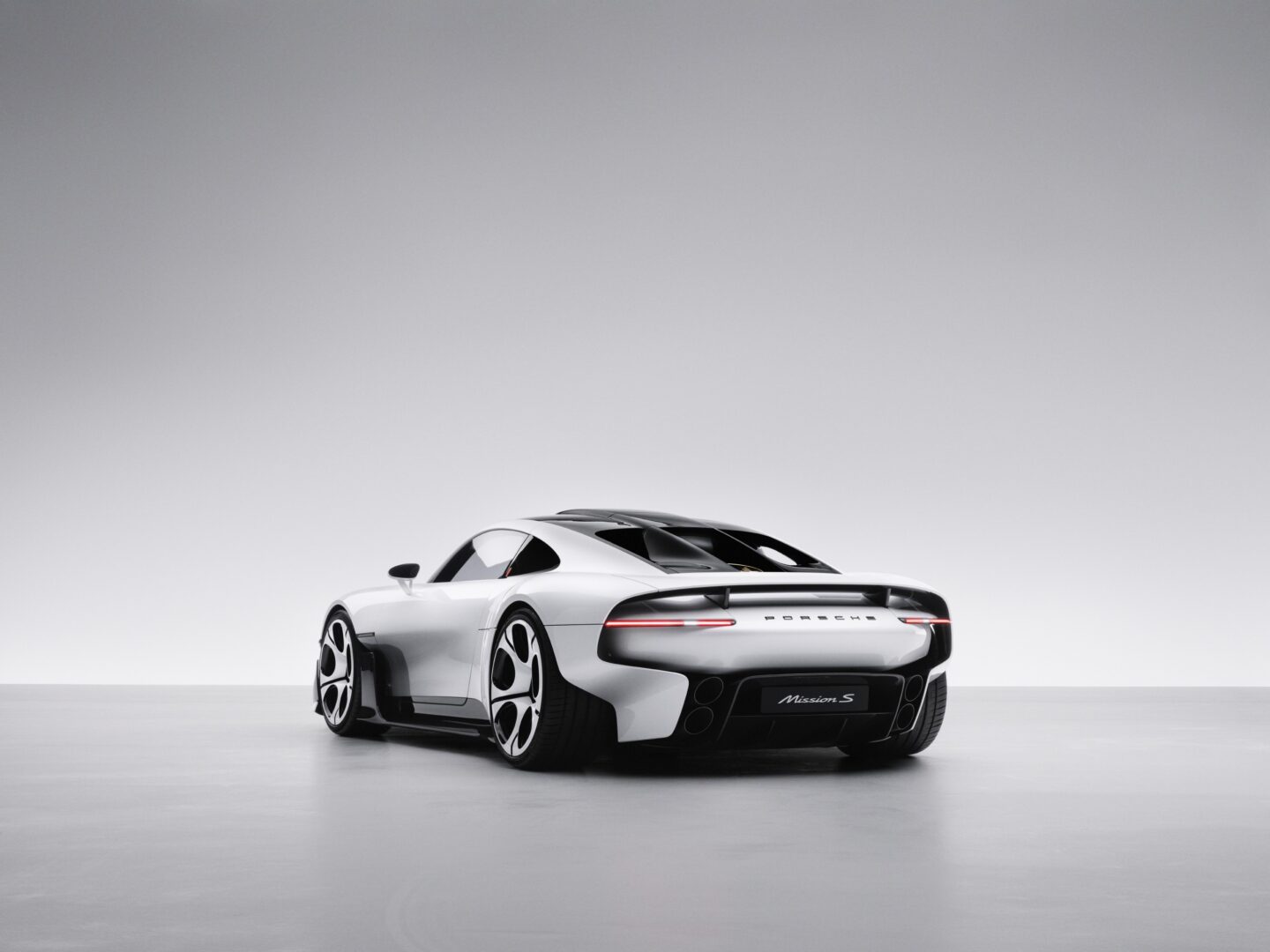
A new Porsche concept can be read as a design exercise, a technical teaser, or a promise of something fast. The Mission S is also a message about the kind of business Porsche wants to become. Unveiled in New York, the mid-engined concept is meant to preview a regular-production sports car that will sit above the 911 - rather than another small-run halo model like the Carrera GT or 918 Spyder.
That distinction matters. Porsche isn't just adding another exotic car to the lineup. It's trying to make more money with fewer vehicles as it works to rebuild margins that slipped from 18 percent three years ago to 1 percent last year. The plan - Sportwagenschmiede '35 - puts higher-value products, more customer tailoring, and more expensive market segments at the center of a turnaround Porsche says it will run through 2035.
The concept gives a direction, but it's not a full product brief. The announcement doesn't say anything concrete about powertrain, performance, price, or launch timing for the Mission S. So the question isn't "what are the specs?" It's what this reveal does tell us, why Porsche needs cars like this, and what has to go right before a premium strategy can translate into stronger results.
What Porsche has announced about the Mission S
The key detail isn't only that the Mission S is mid-engined. Porsche says the concept previews a model that will sit above the 911 and join its regular production lineup. That puts it in a different category than the Carrera GT and 918 Spyder, which were limited-run cars rather than ongoing members of the range.
A regular-production model has to do more than make a splash at launch. It needs a defined spot in the lineup, a customer base large enough to justify ongoing development and production, and a plan that holds up after the first wave of buyers. Porsche's stated positioning suggests the Mission S targets a higher-priced slice of the market, but the company hasn't offered enough detail yet to judge how it will fit alongside the cars it already sells.
Above the 911 does not mean replacing it
Porsche's wording puts the Mission S above the 911. It does not say it's replacing the 911, succeeding it, or taking the 911's place. That distinction is worth holding onto. A car can share the brand's sports-car turf without trying to swap out an existing nameplate.
For buyers, the 911 is a familiar reference point - there are years of identity built into it, plus a wide range of versions. A new model above it will have to justify its price and its role without making the 911 feel unnecessary. That's as much about positioning as it is about engineering. Porsche will need to explain what the Mission S offers that a highly specified 911 doesn't, and why that difference matters to the person spending the money.
Right now, the announcement doesn't give enough to answer that. The source doesn't include any published specs for output, acceleration, dimensions, cabin layout, or price. It also doesn't confirm what kind of powertrain the production car will use - internal combustion, electric, or something else. Until Porsche says otherwise, it's safer to treat those questions as open, not settled.
A concept can signal intent without settling the details
Concept cars are useful because they let a company show a direction before committing to all the production specifics. They can also confuse people - especially when readers treat an exterior preview like it's a final technical document. In the Mission S case, the solid information is its intended position and its role in Porsche's overall plan, not a set of performance figures Porsche hasn't published.
For now, the takeaway is fairly straightforward: Porsche is preparing a higher-end, mid-engined sports car meant for regular production. That's a meaningful portfolio move. It's not enough to make a direct competitor comparison - or to treat it as a buying decision yet.
For the original announcement and Porsche's description of the reveal, see Ars Technica's report on the Mission S.
Why Porsche is prioritizing value over volume
Porsche's financial situation helps explain why a new model above the 911 matters. The company's profit margin was reported at 18 percent three years ago, then fell to 1 percent last year. It has improved since, but the size of the drop changes the kind of turnaround management has to pull off. Adding more cars won't help if the business can't earn attractive returns from them.
The Sportwagenschmiede '35 plan sets a target of double-digit margins by 2035. Porsche's stated approach is to prioritize value over volume, with more individualization and more models in higher-margin segments. In plain terms: Porsche wants a mix of cars that makes more money per vehicle, instead of relying only on selling more units.
That can sound simple, but it creates pressure in multiple places at once. A more expensive car has to feel noticeably different to justify the price. More personalization can raise the average transaction value, but it can also complicate operations - more options mean more ways for things to go wrong. And a car placed at the top of the range has to be desirable without being so rare that it can't support the broader business.
The commercial role of a regular-production flagship
A limited-run supercar can generate attention and reinforce the brand's technical credibility. A regular-production model has a broader job commercially: it has to be built in a repeatable way and sold over a sustained period. That's the kind of structure that can fit a margin recovery plan - though it still doesn't guarantee success.
This matters even more for profitability. A very low-volume car can carry a high price, but development costs and constrained production can limit what it actually contributes. A regular model can spread those costs across more vehicles, as long as demand and pricing hold up. Those are conditions Porsche will need to satisfy - not conclusions we can draw from concept imagery.
Porsche Chairman Michael Leiters described the plan as strengthening the sports-car brand across model lines and introducing desirable products in high-margin segments. The Mission S fits that idea on paper. The real test will be whether it attracts enough buyers at the expected price while keeping the appeal of the cars around it.
Individualization has value - and a cost
Porsche wants to increase customer individualization as part of its strategy. There's a reasonable business logic here: buyers who pay for a premium car may also pay for a configuration that feels personal. It can also make a product stand apart without forcing Porsche to create a completely different model for every preference.
But customization doesn't automatically create margin. Each extra option has to be specified, sourced, built, and delivered correctly. A complicated set of configurations can make production planning harder, stretch lead times, and create more opportunities for mistakes. Porsche's challenge is to capture the extra revenue without making the factory - or ownership - less reliable.
That's one reason the Mission S shouldn't be judged only as a shape or a list of future performance promises. Its strategic value depends on whether Porsche can connect the differentiation buyers want to the processes that build, sell, and support the car.
The trade-offs behind a more expensive Porsche range
Charging more can help margins, but it can also shrink the pool of potential buyers. If prices rise faster than the value customers feel, demand can soften. The risk isn't that premium products are inherently wrong - it's that the strategy only works if Porsche keeps the product proposition credible at each step.
Porsche is also managing a wider portfolio transition. The company plans an electric 718 Boxster and Cayman, an electric-or-gasoline smaller SUV below the Macan (due in 2028) with gasoline and plug-in powertrains, and new models in larger, higher-priced segments alongside the Cayenne and Panamera. Those efforts cover different body styles and different approaches to powertrains. They also compete for investment, engineering attention, and production capacity.
On top of that, Porsche's restructuring includes plans to lay off 9,000 people as part of a broader Volkswagen Group effort to reduce headcount over the next decade. That makes execution more consequential. Cost reductions may support profitability, but they also need to be handled in a way that doesn't undermine the capabilities Porsche needs to develop new vehicles, build them consistently, and support customers afterward.
Fewer, more expensive cars are not a shortcut
"Value over volume" is a strategy, not a guarantee. It can work when the product has a clear reason to command a premium and when the company can deliver it efficiently. It fails when customers don't see enough difference, when the lineup becomes confusing, or when costs rise alongside prices.
There's also a portfolio risk. If a company leans harder on a smaller set of high-priced products, a slowdown in those segments hits harder. A broader range spreads the exposure across more kinds of customers, but too many models can make the organization harder to run. The practical task is deciding which cars reinforce the brand and the business, and which add complexity without delivering enough return.
The Mission S may help Porsche move upward, but it can't be evaluated in isolation. It will sit among an existing mix of sports cars and SUVs, plus forthcoming electric and plug-in models. Buyers will compare it both to other premium offerings and to what Porsche itself already offers.
The workforce plan matters to the product plan
Headcount reductions and new-model investment can look like they point in opposite directions. They don't have to be incompatible - companies often cut costs in some areas while funding projects they consider more important. Still, a restructuring plan has to preserve the skills and coordination needed to deliver what it promises.
That becomes especially important when Porsche changes its model mix and adjusts powertrain options across the lineup. New vehicles require engineering, supplier management, production planning, software work, and after-sales support. Cutting costs without weakening those systems is harder than simply publishing a target.
Porsche says it wants to improve margins by 2035. That's a long timeline, which gives it time to reshape the lineup - but it also leaves a lot of room for execution problems between the plan and the outcome. The Mission S is one visible piece of that plan. It isn't proof by itself that the turnaround is already working.
What to watch before the concept becomes a product
The next useful information will be about the production car, not just the concept. Porsche will need to clarify powertrain, performance, pricing, production timing, and who it expects to buy it. Those details will show whether the Mission S is a distinct product with a clear place in the lineup - or just a premium idea without a solid commercial role.
The comparison to the 911 will be central. A higher price is easier to justify when the product delivers a clearly different experience, not just a more expensive way to buy something similar. That difference could show up in design, engineering, materials, performance, or ownership experience - but the announcement hasn't said which areas Porsche plans to lean on. Until it does, any detailed comparison is guesswork.
A practical checklist for reading future announcements
When Porsche publishes more information, it helps to run the reveal through four questions:
- What is confirmed? Split production specs and dates from concept-only features and company targets.
- Who is it for? Look for a clear buyer and use case, not just a spot in a price hierarchy.
- Why is it above the 911? Check whether Porsche explains a real difference in product and ownership, not just positioning.
- How does it support the business plan? Consider expected production scale, individualization, and how it relates to other new models - while remembering that actual margins and demand may not be fully disclosed.
That framework applies across the rest of the plan, too. The electric 718, the smaller SUV, and the larger-segment models will each need their own market, production strategy, and role in the portfolio. Listing future launches isn't the same as building a profitable product strategy. What matters are the choices Porsche makes - and whether it can execute them.
For now, the Mission S is best understood as a direction-setting announcement. Porsche wants a regular-production sports car above the 911 and sees high-value products as part of its route back to double-digit margins. The concept makes that intent visible, while leaving most of the buying and engineering questions unanswered.
Conclusion
The Mission S matters because it connects a new mid-engined sports-car concept to Porsche's wider push to rebuild profitability. The company is aiming for a more valuable product mix, not just more vehicles - and placing the model above the 911 gives that plan a clear anchor.
This concept is a signal, not a scorecard. The commercial case will depend on the final production car, its price, how clearly it differs from the 911, and whether Porsche can deliver the broader turnaround without losing control of execution. Keep your focus on confirmed production details rather than treating concept images as a specification sheet. For the original report, read the Mission S announcement coverage.