European Tech Funding: How Startups Can Scale at Home
Europe’s tech sovereignty depends on helping startups scale at home. See how the EIF’s €4bn fund-of-funds targets AI, defence, biotech and growth capital.

Europe Has the Startups. Can It Fund Them to Stay?
Europe doesn't lack ambitious tech companies. The real question is whether they can pull in enough growth capital to become global businesses - without packing up their headquarters, leadership, or key operations somewhere else.
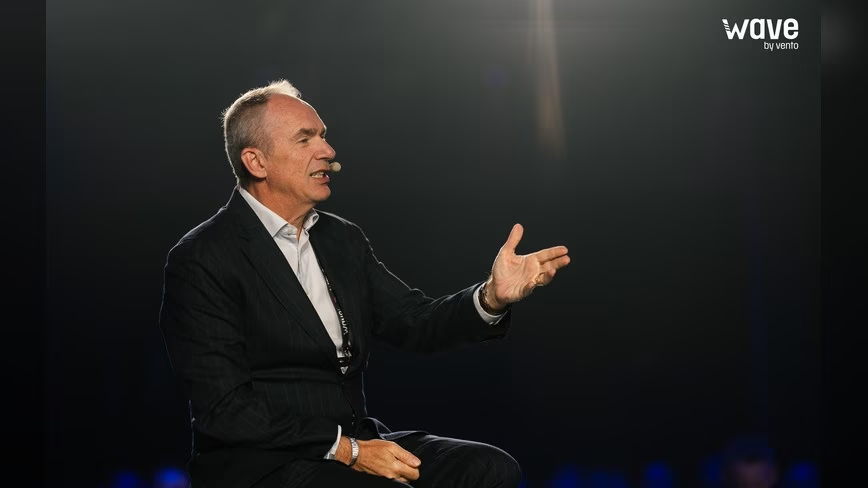
That was at the heart of Jean-Christophe Laloux's remarks at Wave by Vento in Turin on 9 October 2026. Laloux is director general for EU lending and advisory operations at the European Investment Bank (EIB), and he's due to become chief executive of the European Investment Fund (EIF) on 1 January 2027. The EIF is the EIB Group's venture investment arm.
Laloux's point was straightforward: innovation isn't enough. European firms also need the funding and financial infrastructure to scale. The European Tech Champions Initiative is one attempt to bridge that gap. It has nearly €4 billion committed to venture funds, and a second version is expected to broaden the approach.
And this doesn't only matter for venture capital. The initiative also touches the future of European AI, cybersecurity, biotech, climate technology, and defence. It leaves policymakers and founders with a practical question: what kind of capital helps a company grow without turning "sovereignty" into protectionism?
Why scaling is Europe's funding bottleneck
Laloux said the startup funding problem has shifted. Seed-stage innovation still needs support, but the bigger squeeze usually comes later - after a company has proven demand and needs a lot more capital to expand.
That shift often lands around Series B and Series C. A company might have a product that works, early customers, and a growing team. Then it needs to hire internationally, build infrastructure, push into new markets, and fund years of research. Those moves require rounds that are hard to assemble from a fragmented pool of European venture funds.
"It's not enough to innovate in Europe. You also must be able to scale in Europe."
The distinction matters. A strong seed ecosystem can generate lots of promising companies. It doesn't, on its own, guarantee they'll be able to fund the next stage. When growth rounds are too small or too slow to put together, founders may look to larger overseas investors. That can be a sensible business decision - not automatically a rejection of Europe. But if it becomes the default, Europe could end up with companies whose key funding relationships and strategic decisions are centered elsewhere.
Why fund size affects company choices
Venture funds have limited reserves and rules about concentration. A fund that's great at making early investments may not have the firepower to lead - or even comfortably follow - in a much larger later-stage round. That's the gap: what a startup needs versus what local investors can credibly support.
The fix isn't just "make every fund bigger." Larger funds need experienced managers, a dependable pipeline of companies, and investors willing to stomach long time horizons. Still, when a company is facing a big growth round, having funds that can actually participate changes the options. It's the difference between continuing to raise in Europe and treating relocation (or an overseas syndicate) as the only workable path.
This is why Laloux links scaling to technological sovereignty. The issue isn't that every European company has to stay exclusively European-owned. The issue is whether Europe has a capital market that gives top companies a real choice about where and how they grow.
Sovereignty is not a wall around the market
Laloux made a point of separating sovereignty from protectionism and isolationism. Here, sovereignty means Europe having credible alternatives in areas where dependence could become a strategic weakness - from critical raw materials to cyber resilience.
That distinction matters, because "sovereignty" can easily turn into a slogan for shutting out outside capital or insulating local businesses from competition. Either approach doesn't automatically produce better technology companies. A protected market can keep incumbents comfortable without improving products, and restrictive rules can make it harder for new firms to compete.
A more useful test is whether Europe can develop, finance, and deploy important capabilities while staying open to international investment and collaboration. Capital is one piece, but not the only one - customers, talent, infrastructure, and predictable regulation all matter too. The funding initiative addresses one part of that system. It can't fix everything by itself.
How the European Tech Champions Initiative works
The European Tech Champions Initiative is a fund of funds. Instead of investing directly in startups, it puts capital into venture funds, which then invest in companies. Laloux said the initiative is nearly €4 billion, backed by six EU member states and the EIB Group.
The first focus is funds of about €1 billion. At that scale, the idea is that funds can write larger cheques and support companies through later rounds. The intended chain is simple: public and institutional backing helps create larger venture funds; those funds back growth-stage companies; more companies then get the option to scale from Europe.
Laloux said the initiative backed 12 funds. He described that as almost three times the number of €1 billion venture funds in Europe compared with five years earlier. Those funds already hold 15 European unicorns - privately held companies valued at $1 billion or more.
That unicorn count gives a rough sense of reach, but it isn't proof the scaling problem is solved. A $1 billion valuation is not the same thing as profitability, durable market leadership, or a successful long-term outcome. It means investors assigned a high value to a company - not that the company has finished building. The more meaningful question is whether these firms can keep growing, build lasting businesses, and retain access to capital as their needs change.
Why the next version adds smaller funds
Laloux expected a second version to be announced in November 2026. The plan would add support for funds in the €300 million to €500 million range, because not every European ecosystem can produce - or sustain - a €1 billion fund.
This is a pragmatic adjustment. Trying to apply one fund-size target everywhere could end up concentrating support in the places that already have the biggest financial hubs. Smaller funds can make more sense where the company pipeline is still developing, or where investment opportunities cluster in specific sectors and stages.
There's a trade-off. Smaller funds might not be able to lead the largest rounds or provide extensive follow-on capital. But a wider range of fund sizes could give more European companies access to investors who understand local markets. The goal shouldn't be to make every ecosystem look like London, Paris, or Berlin. It should be to connect viable companies to enough capital for their specific growth path.
The second version is also expected to add a platform that lets institutional and private investors co-invest alongside participating funds. If it's designed well, that could bring in more private money and give investors a clearer way to participate. The details will matter: investors need understandable terms, a clear allocation process, and confidence that co-investing won't turn fundraising into a slow, cumbersome process.
For more context on the announcement and Laloux's remarks, see The Next Web's report from Wave by Vento. The European Investment Fund and the European Investment Bank also provide background on the institutions behind the initiative.
What Italy's investment says about the model
Italy contributed €150 million to the European Tech Champions Initiative. Laloux said the funds it backs have invested nearly €600 million in seven Italian companies, three of them alongside international partners.
Those numbers show the leverage the model is trying to create. Public and institutional participation can help attract - or mobilise - a larger pool of money through the funds and their co-investors. But the figures should be read with care. The reported investment total isn't a guarantee of future returns, and it doesn't mean every euro came directly from Italy's contribution. It shows activity linked to the funds - not a straight one-to-one return calculation.
Laloux also pointed to the presence of international partners as a sign that investors outside Italy see the ecosystem as interesting. That's a fair read, even if it's not a full market assessment. Co-investment can bring additional financing, international networks, and experience with later-stage growth. It can also mean local companies are competing for attention inside global portfolios - so follow-on support quality still matters.
Capital is only one part of the growth equation
Italy's example underlines a broader point: access to investment helps, but it doesn't automatically make a startup scalable. Companies still need customers who will buy, skilled employees, reliable infrastructure, and the ability to operate across borders. Founders also need terms that fit the economics of their businesses.
For policymakers, that means a fund-of-funds programme should be judged alongside the conditions that determine whether companies can actually use the money effectively. Are procurement processes open to young tech suppliers? Can a company sell across the EU without constantly running into incompatible national requirements? Can it recruit the people it needs? And when it reaches the next milestone, are later-stage investors there?
For founders, the takeaway is to treat funding geography as one input in a bigger financing strategy. Local capital can bring proximity and regional knowledge. International partners can add reach or larger round sizes. The right mix depends on the company's market, capital needs, and ambitions - not on a blanket rule that every investor must be local.
Where capital is flowing - and what sovereignty means
Laloux said deep tech is a fast-growing part of the European economy. He also said its valuation has risen from roughly €1 trillion five years ago to €4 trillion, and he named climate technology, security and defence, space, and biotech among the areas drawing attention.
That's a broad spread. A biotech company, a satellite business, and a cybersecurity provider don't share the same development cycles, capital requirements, or routes to market. Treating them as one investment category can blur the differences. Still, they share something relevant to growth funding: building a competitive product may take significant investment before revenue becomes predictable.
Laloux cited Isar Aerospace, whose Spectrum rocket launched from Norway, as an example of a company backed by funds that received EIB Group money. His point was basically about patient capital and networks that can support progress over multiple stages.
He also said security and defence (including cybersecurity) saw the biggest growth in capital and valuations over the previous year. As he described it, the EIF's focus areas include AI, health and biotech, security and defence, and cleantech. These are strategic sectors - but the case has to be evaluated company by company. A "priority" label doesn't prove a product works, that customers will adopt it, or that a fund will generate a return.
AI: invest without treating regulation as an afterthought
Laloux argued Europe can't afford to sit out AI, since it could raise productivity. At the same time, he warned against two extremes: leaving AI completely unregulated, or loading it with rules that choke useful development. The tension is familiar - regulation needs to manage real risks while still being workable for companies building and deploying new systems.
Laloux said the EIB has earmarked €3 billion for the EU's AI gigafactories. He framed that investment as infrastructure - another layer of the AI economy separate from venture funding for individual startups. Compute capacity can limit research and product development, but infrastructure spending alone doesn't guarantee European companies build useful products or find customers. It has to connect to talent, commercial demand, and the ability to compete internationally.
The same logic applies to cybersecurity and other strategic technologies. Funding can create alternatives and improve resilience, but only if the solutions are secure, reliable, and usable. In the end, sovereignty should be measured by what the system can do - not just by where a company is headquartered or where its servers sit.
What to watch next
The next version should be judged by results, not just by how much money gets announced. Practical indicators include:
- Whether the programme brings in private and institutional investors alongside public backing.
- Whether funds of different sizes reach companies beyond Europe's biggest venture hubs.
- Whether portfolio companies can raise follow-on rounds and keep a meaningful choice about where to grow.
- Whether investment supports commercially useful technology, not only higher private valuations.
- Whether targeted sectors build resilient supply chains and dependable products.
These measures take longer and won't fit neatly into headlines the way unicorn counts do. But they track the real goal more closely: a European technology sector that can build and scale businesses that matter.
Conclusion: measure the system by what it helps companies do
Europe's technology challenge isn't just producing more startups. It's making sure promising companies can access the capital, infrastructure, and markets they need to grow - without moving elsewhere becoming the default strategy.
The European Tech Champions Initiative tackles one part of that problem by backing venture funds that can write larger cheques. Expanding to include smaller funds and a co-investment platform could widen participation. But the real test will be execution, and whether companies can turn financing into durable businesses.
For founders and investors, the useful question isn't whether the capital is European or foreign. It's whether the financing gives a company the best chance to build, compete, and keep real strategic choices. Judge the next version by the companies it helps scale - not only by the size of its headline commitment.